CNC machining materials
Aluminum, stainless steel, mild steel, tool steel, titanium, brass and copper. What each alloy series means, how they compare, and which finishes suit them.
- Metals
- 7 families
- Plastics
- On request
- Grade
- Confirmed in quote
- Certificate
- Mill cert included
These are the CNC machining materials we work with: seven families of metal, each across the alloy series below. We also machine plastics and other materials on request. This page explains what the series on a drawing means, how the metals compare, which finishes suit each one, and how to specify the material so it’s quoted correctly.
Which metals can you machine?
We machine these metals by CNC milling and turning. We also cut and bend sheet metal in aluminum, stainless steel, mild steel, brass and copper. The exact grade is confirmed in your quote.
- Aluminum1xxx, 2xxx, 3xxx, 4xxx, 5xxx, 6xxx, 7xxx, 8xxx
- Stainless steel200 series, 300 series, 400 series, PH grades
- Mild steel10xx, 11xx, 12xx
- Tool steelA series, D series, H series, M series, O series, S series, W series
- TitaniumGrades 1 to 4, Grade 5
- BrassC2xxxx, C3xxxx
- CopperC1xxxx
Plastics and other materials on request. The exact grade is confirmed in your quote.
The CNC milling and CNC turning pages explain how each process handles these metals.
What do the series numbers on a drawing mean?
Each metal family has its own numbering system, kept by a standards body. Reading the first digits tells you what the alloy is made of and how it behaves.
Aluminum: the Aluminum Association series
The four-digit wrought aluminum system was adopted in 1954 and is maintained by the Aluminum Association. The first digit gives the main alloying element.
Series Main alloying element Heat-treatable? 1xxx Commercially pure aluminum (99% or more) No 2xxx Copper Yes 3xxx Manganese No 4xxx Silicon Some alloys 5xxx Magnesium No 6xxx Magnesium and silicon Yes 7xxx Zinc Yes 8xxx Other elements, including lithium Varies The 2xxx and 7xxx series reach the highest strengths, 6xxx is easy to extrude and machine, and 5xxx welds well (ASM International).
Carbon steel: the SAE and AISI four-digit system
Mild steels follow the SAE system, set out in SAE J403 (SAE International). The last two digits give the carbon content in hundredths of a percent (PMPA).
- 10xx: plain carbon steel.
- 11xx: resulfurized, with sulfur added for easier machining.
- 12xx: resulfurized and rephosphorized, for free machining.
Stainless steel: the AISI series
Stainless grades are grouped by their structure (SSINA):
- 200 and 300 series (austenitic): excellent corrosion resistance, non-magnetic when annealed, not hardened by heat treatment.
- 400 series (ferritic and martensitic): magnetic; the martensitic grades can be hardened.
- Precipitation-hardening (PH) grades: strengthened by aging, used for parts such as valves and gears.
Tool steel: the AISI letter groups
Tool steels are grouped by letter, by how they harden or what they’re for (ASM International):
Group Meaning Typical use A Air-hardening, cold work Dies, punches, gauges D High-carbon, high-chromium Wear-resistant tooling H Hot work Tools that run hot M Molybdenum high-speed Cutting tools O Oil-hardening, cold work General tooling S Shock-resisting Tools under impact W Water-hardening Simple, low-cost tooling Titanium: ASTM grades
ASTM B348 covers titanium bar (ASTM International). Grades 1 to 4 are commercially pure titanium, and Grade 5 is the Ti-6Al-4V alloy.
Copper and brass: UNS numbers
The Copper Development Association keeps the UNS copper numbers: coppers run from C10100 to C15999, and brasses from C20000 to C49999 (CDA). C2xxxx are copper-zinc brasses and C3xxxx are leaded brasses for easier machining (CDA brasses).
How do the metals compare?
This table gives a quick, sourced comparison. Use it to narrow the choice, then let the drawing and the quote settle the grade.
| Metal | What it’s known for | A sourced figure | Often used for |
|---|---|---|---|
| Aluminum | Light, fast to machine, takes anodizing | Density 2.7 g/cm³ (ASM) | Housings, plates, brackets |
| Stainless steel | Corrosion resistance | 304 and 316 machine at about half the rate of free-cutting carbon steel (SASSDA) | Fluid, food and outdoor parts |
| Mild steel | Low cost, easy to weld and form | Carbon content set by the grade’s last two digits (PMPA) | Frames, brackets, fixtures |
| Tool steel | Hardness and wear resistance after heat treatment | Grouped A, D, H, M, O, S, W by use (ASM) | Dies, jigs, wear parts |
| Titanium | High strength for its weight, corrosion resistance | Grades 1 to 4 pure, Grade 5 is Ti-6Al-4V (ASTM B348, ASTM International) | Lightweight, corrosion-critical parts |
| Brass | Machines cleanly to a fine finish | C36000 is the machinability benchmark, rated 100 (CDA) | Fittings, bushings, connectors |
| Copper | Electrical and thermal conductivity | C10100 conducts at 101% IACS or more (CDA) | Busbars, contacts, heat sinks |
Which metal is easiest to machine?
Brass and aluminum are generally the easiest metals to machine, and stainless steel and titanium among the hardest. Published machinability ratings can look contradictory, because they use two different baselines. For steels, the baseline is a free-machining carbon steel. For copper alloys, C36000 brass is rated 100 (CDA). A “100” on one scale isn’t the same as on the other.
Free-machining grades, such as leaded brass or resulfurized steel, cut faster but give something up in return. Our CNC turning page explains those trade-offs.
Which metal suits my part?
Start from what the part has to do:
- Light and stiff, with a good finish: aluminum, usually 6xxx; 7xxx where strength matters more.
- Exposed to water, chemicals or washdown: 300-series stainless steel.
- Low cost, welded or painted: mild steel.
- Wear, impact or heat in service: tool steel, hardened after machining.
- Highest strength for its weight: titanium.
- Threaded fittings and fine detail: brass.
- Carries current or heat: copper.
Not sure? Send the drawing with the part’s job described, and our engineers will suggest a metal in the DFM notes.
Which finishes work on which metal?
Not every finish suits every metal. These are the matches that matter most:
| Finish | Works on | Watch for |
|---|---|---|
| Anodizing Type II and Type III | Aluminum | 4xxx is generally not anodized; 7xxx anodizes to grey or brownish tones (Aluminum Anodizers Council) |
| Passivation | Stainless steel | Removes iron left by cutting tools (ASTM A967, ASTM International) |
| Zinc plating | Steel | Not for steels harder than about 46 HRC, because of hydrogen embrittlement (ASTM B633, ASTM International) |
| Powder coating and painting | Steel and aluminum | Masking needed on threads and fits |
| Bead blasting and brushing | Most metals | Changes appearance more than performance |
Our full list of finishes:
- As-machined
- Bead blasting
- Anodizing Type II
- Anodizing Type III (hard anodizing)
- Powder coating
- Brushing
- Passivation
- Electroplating (nickel, chrome, zinc)
- Painting
How do I specify the material on my drawing?
Put the material, the series or grade, and the temper or condition in the title block, for example “Aluminum 6061-T6” or “Stainless steel 316”. If a standard applies, such as ASTM B348 for titanium bar, name it. If you can accept an equivalent grade, say so, and we’ll confirm the exact grade in the quote.
Every order comes with a material certificate (mill cert) that traces the metal to the batch it came from, along with standard QC inspection and ISO 9001 documentation:
- Standard QC inspection
- Material certification (mill certs)
- ISO 9001 documentation
Questions buyers ask about CNC machining materials
What is the best metal for CNC machining?
There isn’t one best metal; it depends on what the part must do. For most general parts, aluminum is the easiest and most economical to machine. Stainless steel is the usual choice where corrosion matters.
Do you machine plastics?
Yes, on request. We work in metals, plastics and other materials, and the exact material is confirmed in your quote.
Can you source a grade that isn’t listed?
Send the drawing with the material callout. We confirm in the quote whether we can supply that grade or an equivalent.
Do you heat treat tool steel?
Tell us the hardness the drawing needs, and the quote confirms how the part will be made and treated.
Will I get a certificate for the material?
Yes. A mill certificate comes with every order.
Ready to start? Upload your drawing for a quote, or read about Maketeq and how we work.
Sources
- Aluminum Association, Industry Standards, https://www.aluminum.org/industry-standards, accessed 2026-10-05.
- ASM International, Aluminum and Aluminum Alloys Subject Guide, https://www.asminternational.org/aluminum-and-aluminum-alloys-subject-guide/, accessed 2026-10-05.
- SAE International, J403 Chemical Compositions of SAE Carbon Steels (named; homepage linked), https://www.sae.org/, accessed 2026-10-05.
- PMPA, Basics of the North American Steel Grade System: Carbon, https://www.pmpa.org/basics-of-the-north-american-steel-grade-system-carbon-2/, accessed 2026-10-25.
- SSINA, Alloy Families, https://www.ssina.com/education/product-resources/alloy-families/, accessed 2026-10-05.
- SASSDA, Stainless steel frequently asked questions, https://sassda.co.za/about-stainless/frequently-asked-questions/, accessed 2026-10-05.
- ASM International, Tool Steels: Standard Designations and Compositions, https://www.asminternational.org/tool-steels-standard-designations-and-compositions-asm-alloy-center/, accessed 2026-10-25.
- ASTM International, B348, A967 and B633 (named; homepage linked), https://www.astm.org/, accessed 2026-10-25.
- Copper Development Association, UNS database, https://uns.copper.org/, accessed 2026-10-05.
- Copper Development Association, C36000 free-cutting brass, https://alloys.copper.org/alloy/C36000, accessed 2026-10-05.
- Aluminum Anodizers Council, Alloy and Temper, https://www.anodizing.org/alloy-temper, accessed 2026-10-05.
Capabilities
How we make metal parts
CNC machining
Prismatic metal parts made from your STEP file and drawing.
Explore CNC machining
CNC milling
Pockets, faces, slots and threaded features on VMC.
Explore CNC milling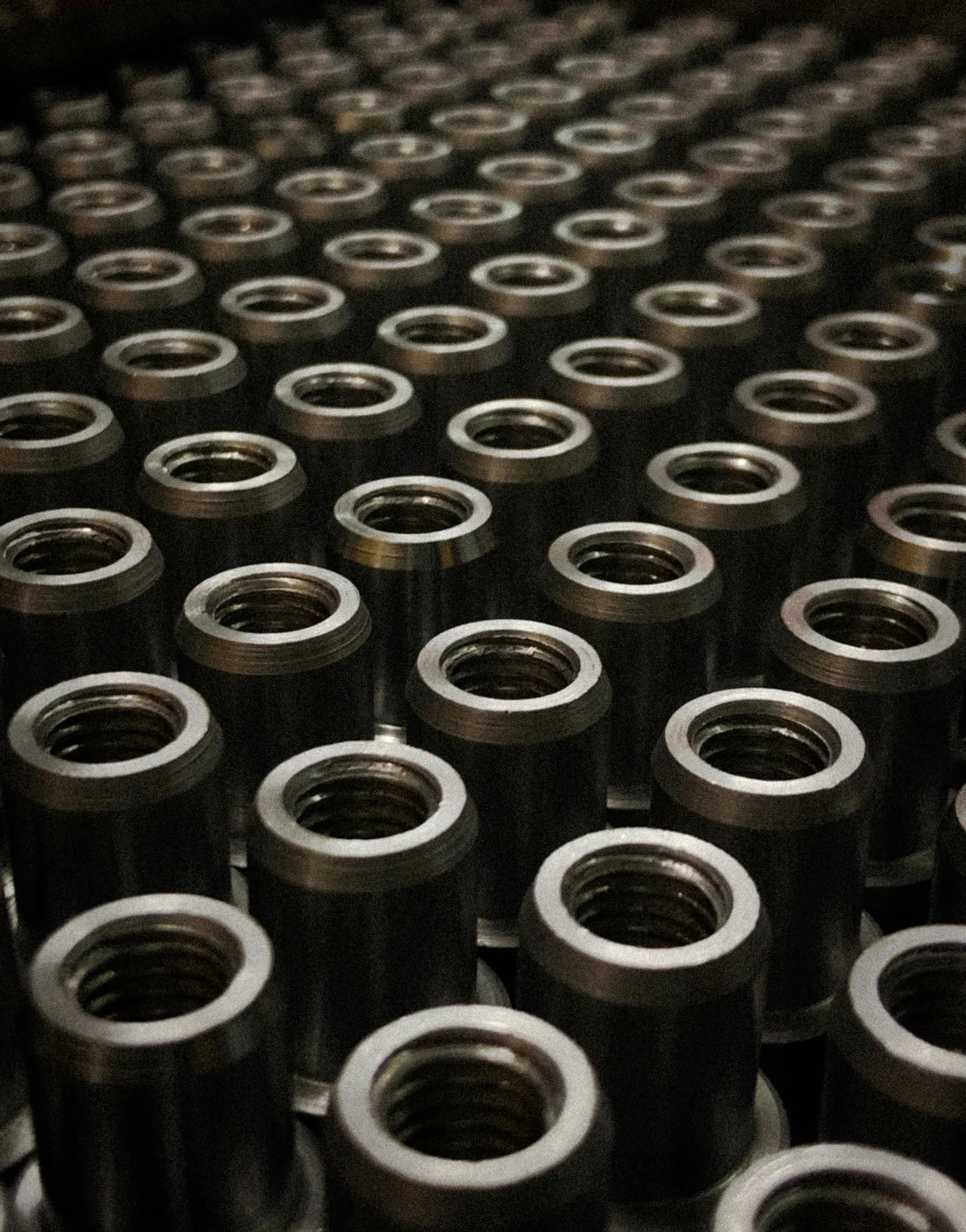
CNC turning
Shafts, pins, bushings and round fittings turned on CNC lathes.
Explore CNC turning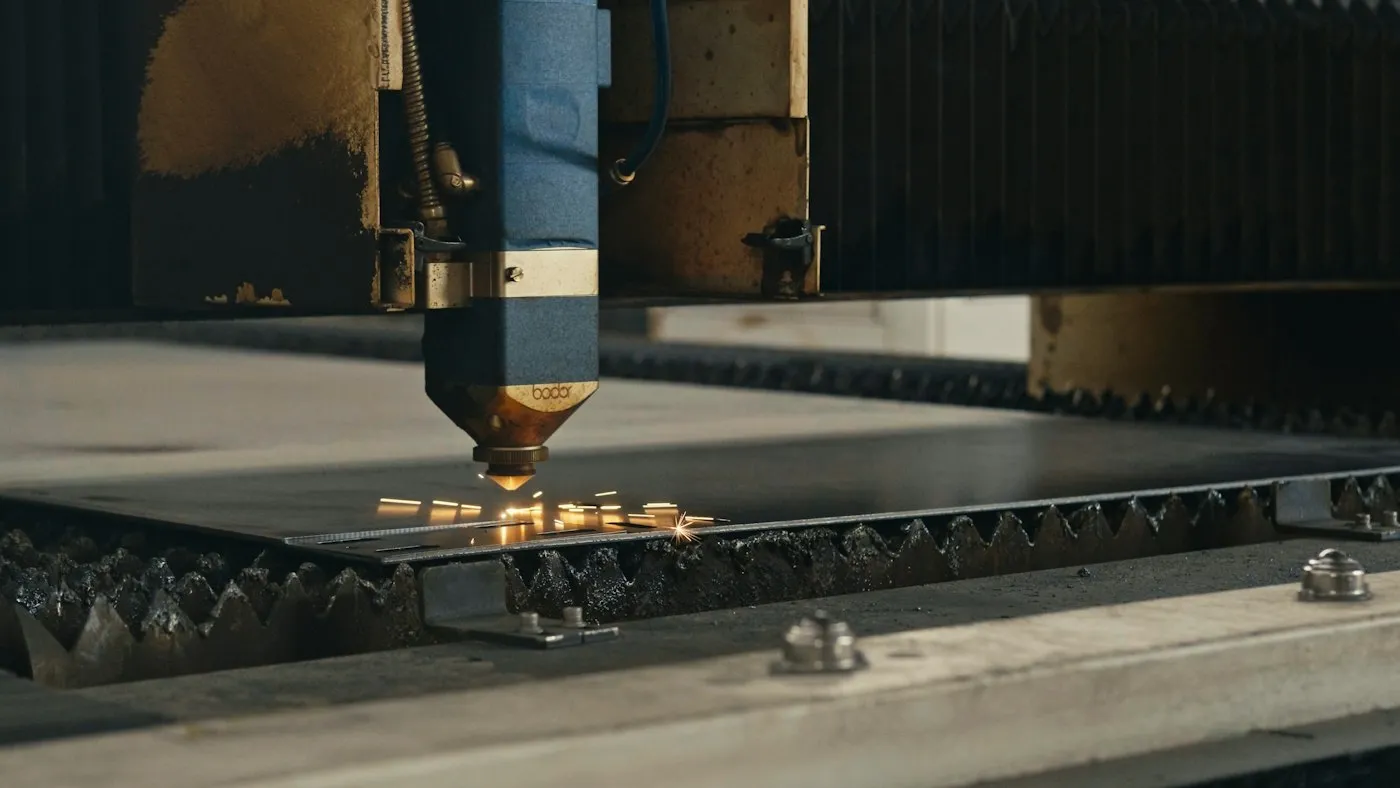
Sheet metal cutting
Flat profiles with clean, repeatable edges.
Explore sheet metal cutting
Send the drawing with your material callout
We confirm the exact grade in the quote, and the mill certificate comes with every order.