Titanium CNC machining
Brackets, fittings, shafts and housings in titanium, milled and turned to your drawing. Choose commercially pure or Grade 5, name the standard, and we confirm the exact grade in the quote.
- Grades
- 1 to 4 and Grade 5
- Grade 5
- Ti-6Al-4V
- Grade
- Confirmed in quote
- Certificate
- Mill cert included
We offer titanium CNC machining in commercially pure Grades 1 to 4 and in Grade 5, the Ti-6Al-4V alloy. This page helps you choose between the grades, explains why titanium cuts differently from steel and aluminum, and shows how to write the callout so the quote matches the part. Titanium is chosen for high strength for its weight and for corrosion resistance.
Which titanium grades do you machine?
We machine the commercially pure grades and Grade 5 by CNC milling and CNC turning. The exact grade is confirmed in your quote.
- TitaniumGrades 1 to 4, Grade 5
Plastics and other materials on request. The exact grade is confirmed in your quote.
The grade numbers come from ASTM. ASTM B348 covers titanium bar and billet: Grades 1 to 4 are unalloyed (commercially pure) titanium, and Grade 5 is the alloy Ti-6Al-4V, with about 6% aluminum and 4% vanadium (ASTM International).
How do the titanium grades compare?
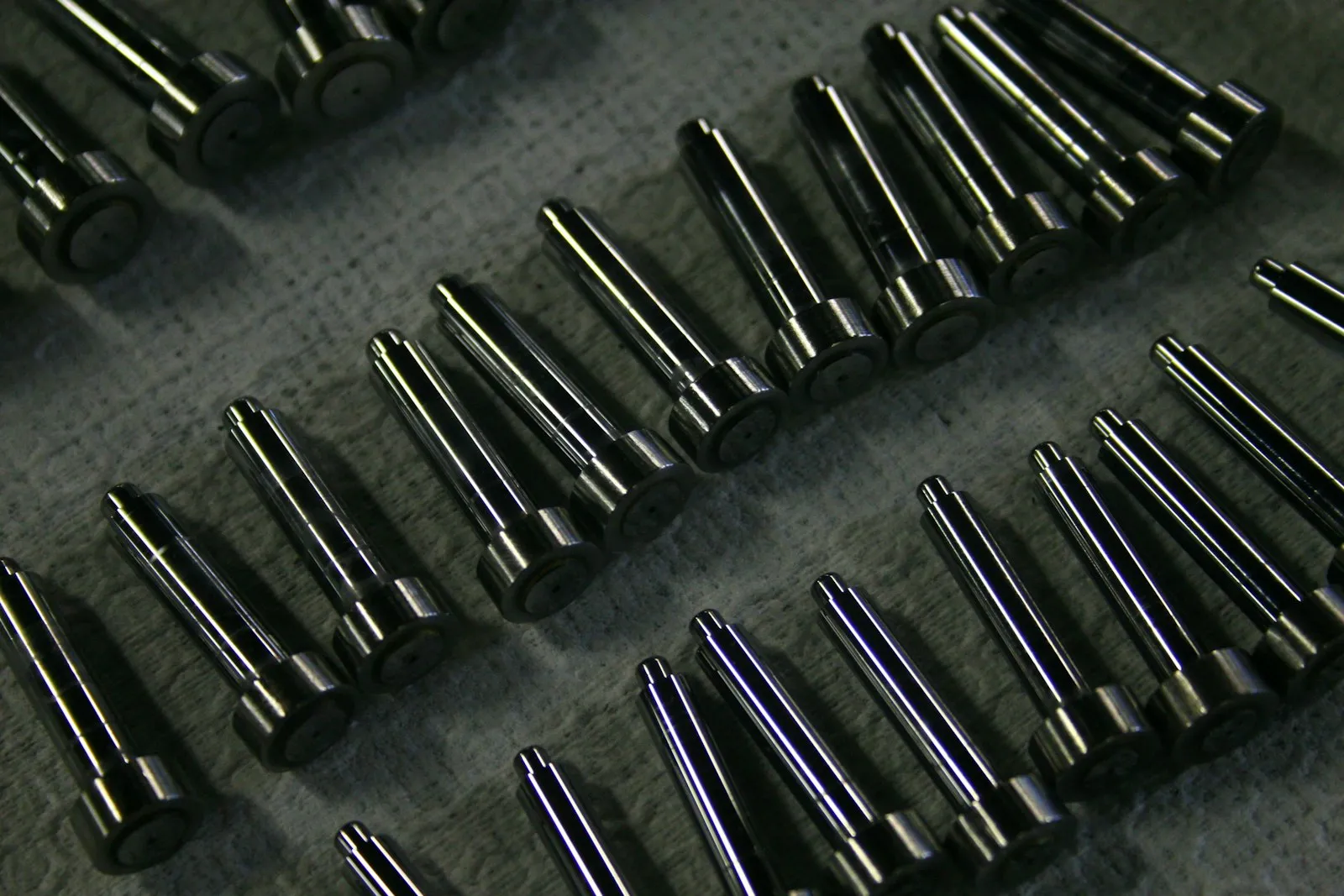
Commercially pure titanium gets stronger and less formable as the grade number rises, because each grade allows more oxygen (NASA). Grade 5 is an alloy, not a purer or harder version of Grade 4, and it’s chosen when the part needs more strength than the commercially pure grades give.
| Grade | Type | UNS number | Strength | Example use on a drawing | Best for |
|---|---|---|---|---|---|
| Grade 1 | Commercially pure | R50250 | Lowest of the CP grades | Formed or lightly loaded parts | Parts where formability matters most |
| Grade 2 | Commercially pure | R50400 | Moderate | General corrosion-resistant parts | A balance of strength and formability |
| Grade 3 | Commercially pure | R50550 | Higher | Parts needing more strength than Grade 2 | Stronger CP parts |
| Grade 4 | Commercially pure | R50700 | Highest of the CP grades | Loaded CP parts | The strongest unalloyed titanium |
| Grade 5 | Alloy, Ti-6Al-4V | R56400 | Higher than CP grades | Structural and load-bearing parts | Strength-to-weight critical parts |
Grades and UNS numbers are from ASTM B348 (ASTM International). We don’t print strength figures here; the mill certificate that ships with your parts gives the values for the batch you receive.
Why is titanium harder to machine?
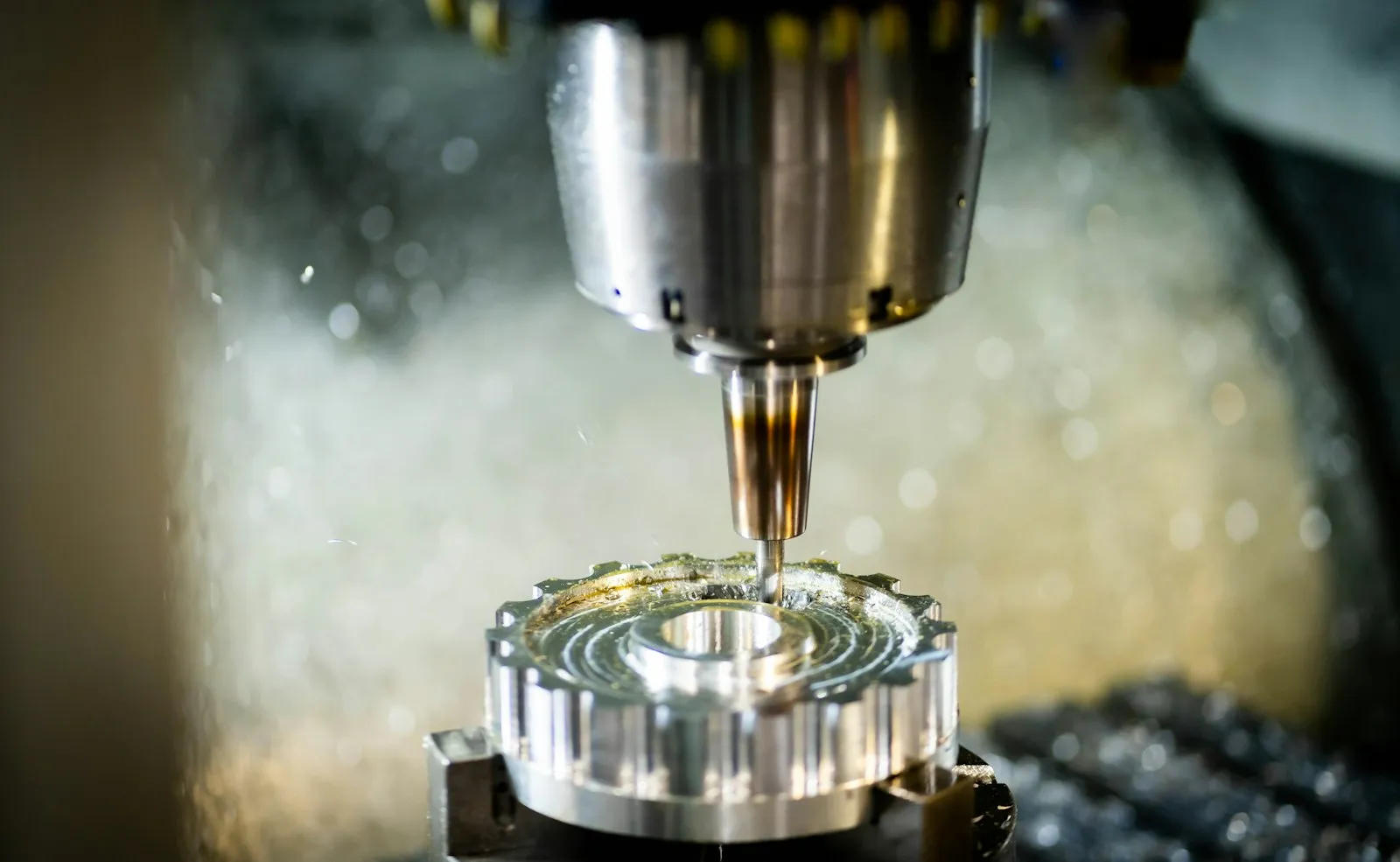
Titanium conducts heat poorly, and the chip touches only a small area of the tool. Together, these push heat into the cutting edge, raising tool temperature and wearing tools faster (NASA). Shops cut titanium more slowly than aluminum or steel for this reason.
What that means for your part:
- Cycle time. Titanium parts take longer to cut than the same part in aluminum, so the material choice shows up in the quote.
- Thin walls and deep pockets. These add cutting time and risk in titanium. Use the thickest walls and largest internal radii the design allows.
- Grade choice. If the part doesn’t need Grade 5 strength, a commercially pure grade can be worth asking about in the quote.
- Sliding fits and threads. If the drawing has sliding fits or threads into titanium, mention how the part works, so the DFM notes can cover it.
If you’re comparing titanium with other metals for a light, strong part, see aluminum for CNC machining, which cuts faster, or stainless steel CNC machining for corrosion resistance at lower cost.
Which finishes suit titanium?
Tell us the finish your part needs, and we confirm in the quote which of our finishes suits titanium for that part. Anodizing Type II and Type III on our list are aluminum finishes.
Our full list of finishes:
- As-machined
- Bead blasting
- Anodizing Type II
- Anodizing Type III (hard anodizing)
- Powder coating
- Brushing
- Passivation
- Electroplating (nickel, chrome, zinc)
- Painting
How do you call out titanium on a drawing?
Write the grade and the product standard. For example (an example callout, not a recommendation): “Titanium Grade 5 (Ti-6Al-4V), bar to ASTM B348”. Drawings also cite ASTM B265 for strip, sheet and plate, ASTM F67 and F136 for surgical implant material, and SAE AMS 4928 for annealed Ti-6Al-4V bar in aerospace (ASTM International; SAE International).
What to put on the drawing or in your message:
- Grade, such as Grade 2 or Grade 5. “Titanium” alone isn’t enough to quote.
- Product standard, such as ASTM B348, if your customer or industry requires one.
- Finish, and any surfaces to leave bare.
- Equivalents, if you’d accept another grade or standard.
Naming a standard such as F136 or AMS 4928 on your drawing tells us what material certification you need. We confirm in the quote whether we can supply material to that standard.
Every order comes with a mill certificate that traces the metal to its batch, along with QC inspection and ISO 9001 documentation.
- Standard QC inspection
- Material certification (mill certs)
- ISO 9001 documentation
Questions buyers ask about titanium CNC machining
Is titanium hard to machine?
It’s harder than aluminum or mild steel. Titanium’s low thermal conductivity pushes heat into the cutting tool, which wears tools faster and means slower cutting (NASA).
Should I choose Grade 2 or Grade 5?
Choose Grade 5 (Ti-6Al-4V) when the part needs more strength than commercially pure titanium gives. Grade 2 is a commercially pure grade that balances strength and formability. Name the grade on the drawing, and we quote that grade.
What do titanium Grades 1 to 4 mean?
They are the commercially pure grades in ASTM B348 (ASTM International). Strength rises and formability falls from Grade 1 to Grade 4 as the allowed oxygen content rises (NASA).
Can you machine titanium to a medical or aerospace standard?
Name the standard, such as ASTM F136 or SAE AMS 4928, on the drawing. We confirm in the quote whether we can supply material to that standard and which documents come with it.
Will I get a material certificate?
Yes. A mill certificate comes with every order, so the grade traces back to the batch the metal came from.
New to the process? Read what CNC machining is and how a part is made, see CNC machining services, or compare all the metals we machine.
Sources
- ASTM International, B348/B348M Titanium and Titanium Alloy Bars and Billets; also B265, F67 and F136 (named; homepage linked), https://www.astm.org/, accessed 2026-10-20.
- SAE International, AMS 4928 (named; homepage linked), https://www.sae.org/, accessed 2026-10-20.
- NASA Technical Reports Server, Sutherland, An investigation of chatter and tool wear when machining titanium (NASA TM X-64830, 1974), https://ntrs.nasa.gov/citations/19740010017, accessed 2026-10-20.
- NASA Technical Reports Server, Aerospace Materials Characteristics, chapter 2, https://ntrs.nasa.gov/citations/20180001137, accessed 2026-10-20.
Capabilities
How we make metal parts
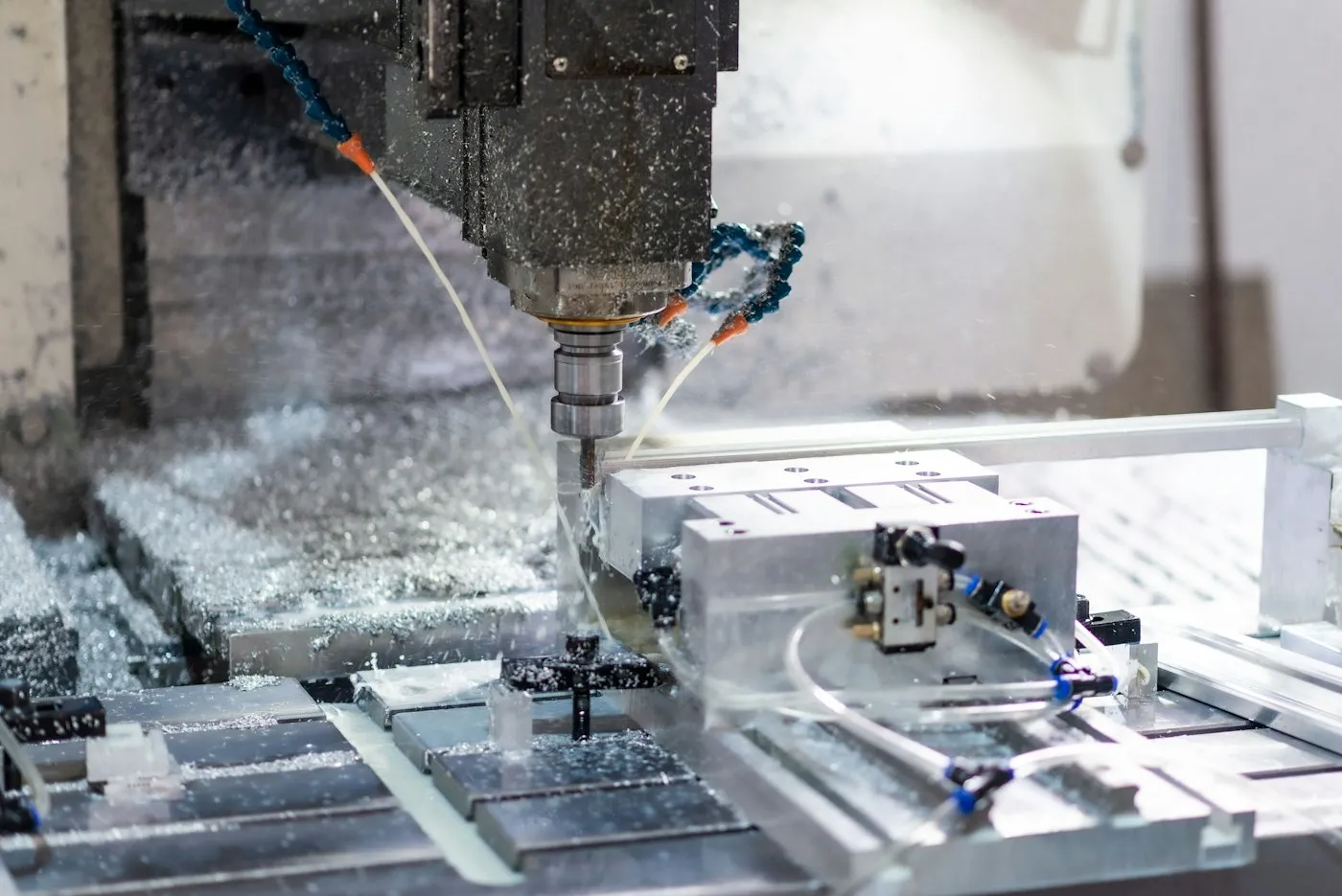
CNC machining
Prismatic metal parts made from your STEP file and drawing.
Explore CNC machining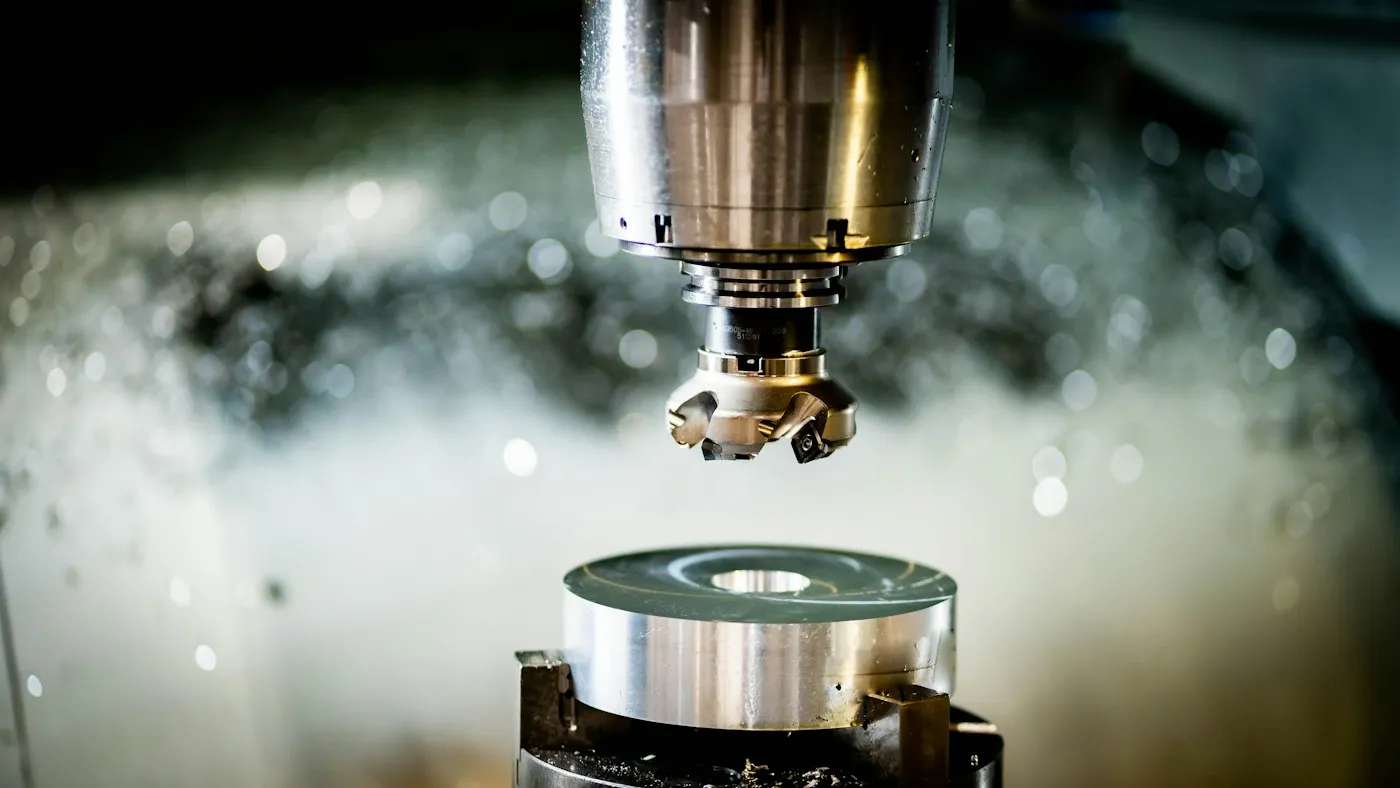
CNC milling
Pockets, faces, slots and threaded features on VMC.
Explore CNC milling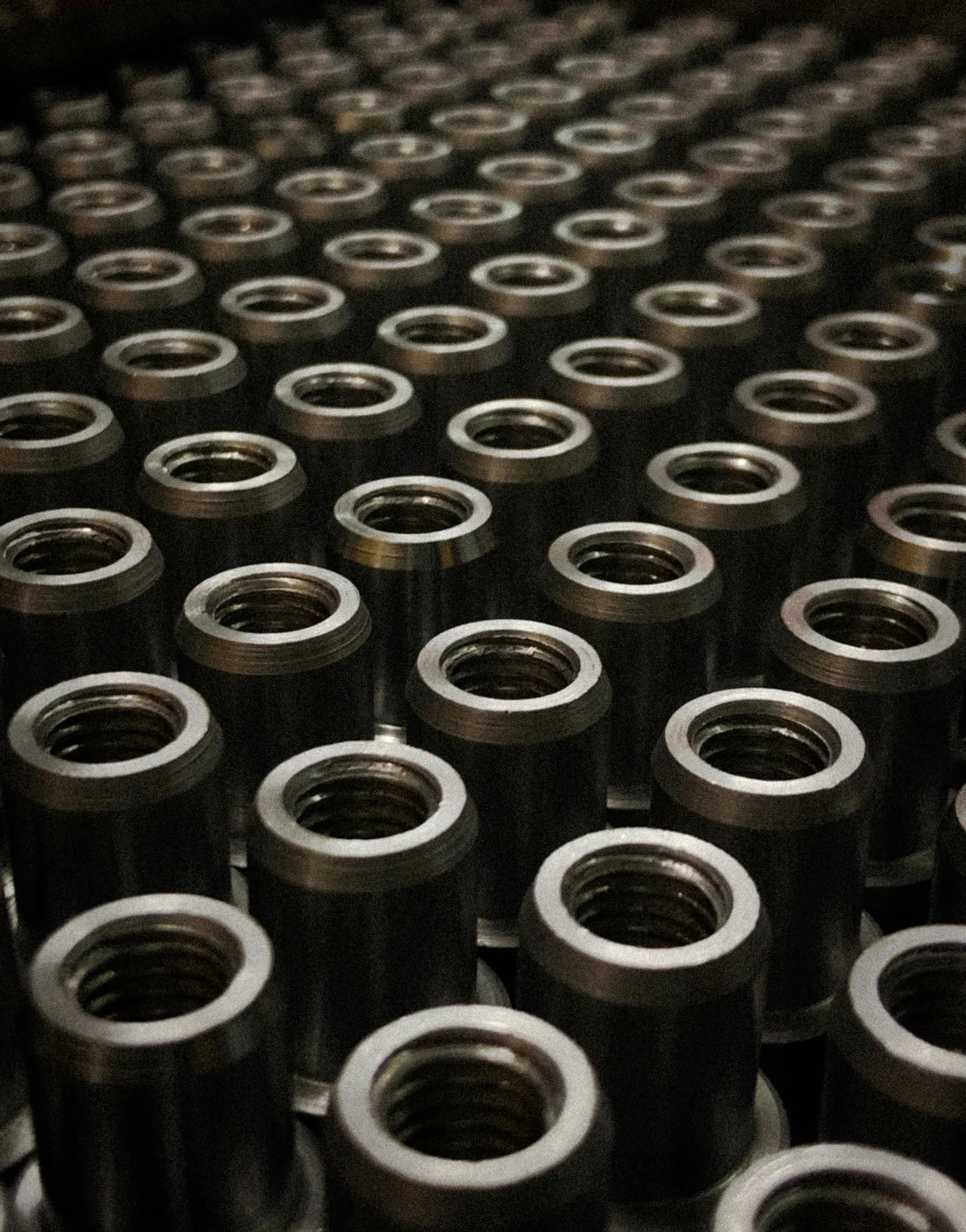
CNC turning
Shafts, pins, bushings and round fittings turned on CNC lathes.
Explore CNC turning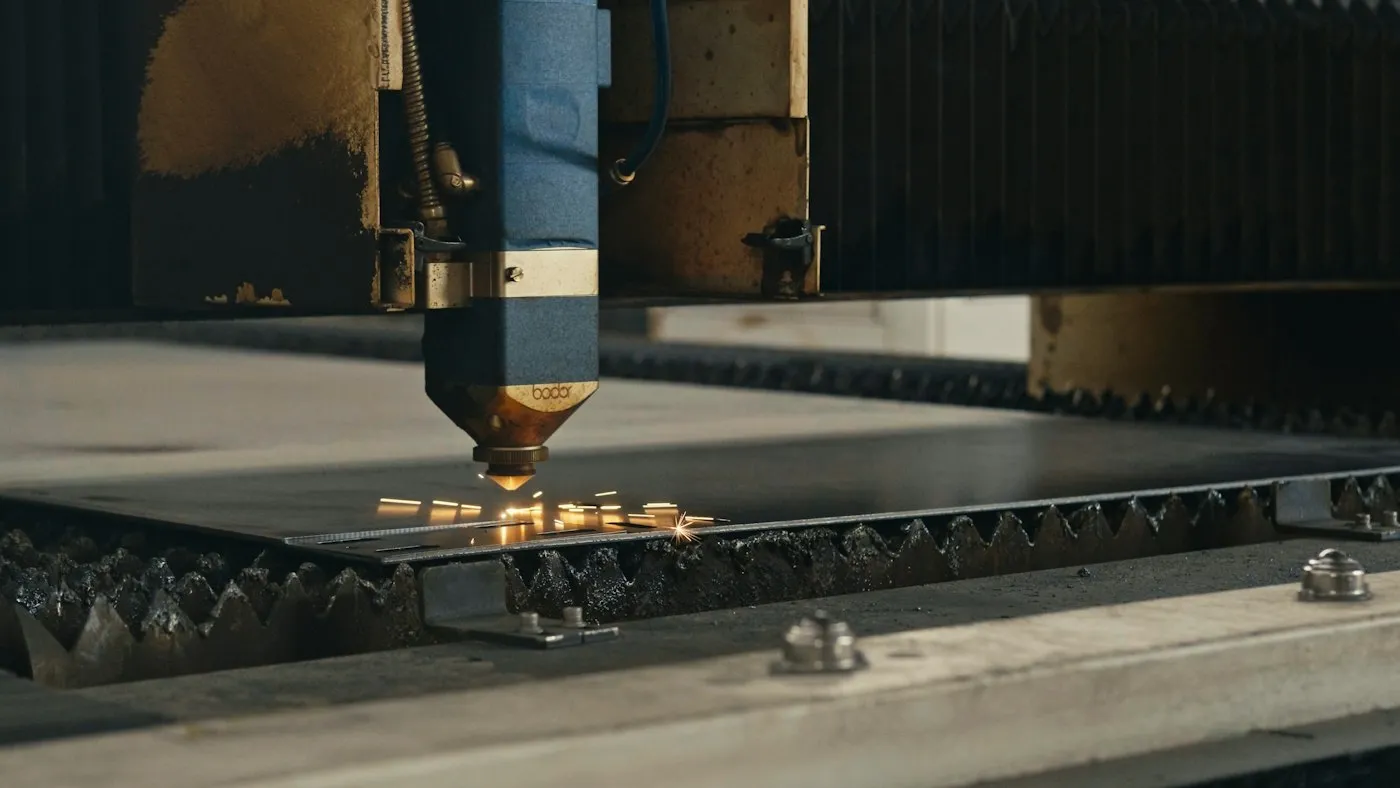
Sheet metal cutting
Flat profiles with clean, repeatable edges.
Explore sheet metal cutting
Send the drawing with your titanium callout
Our engineers check the grade, standard and finish against the part, flag anything that adds cost and send one quote with the price and lead time.