CNC machined parts for robotics and automation
Adapter plates, gripper fingers, sensor mounts, housings and guarding for robot cells, made to your drawing. Bore and hole patterns are checked against it, with a CMM report on request.
See the parts matrix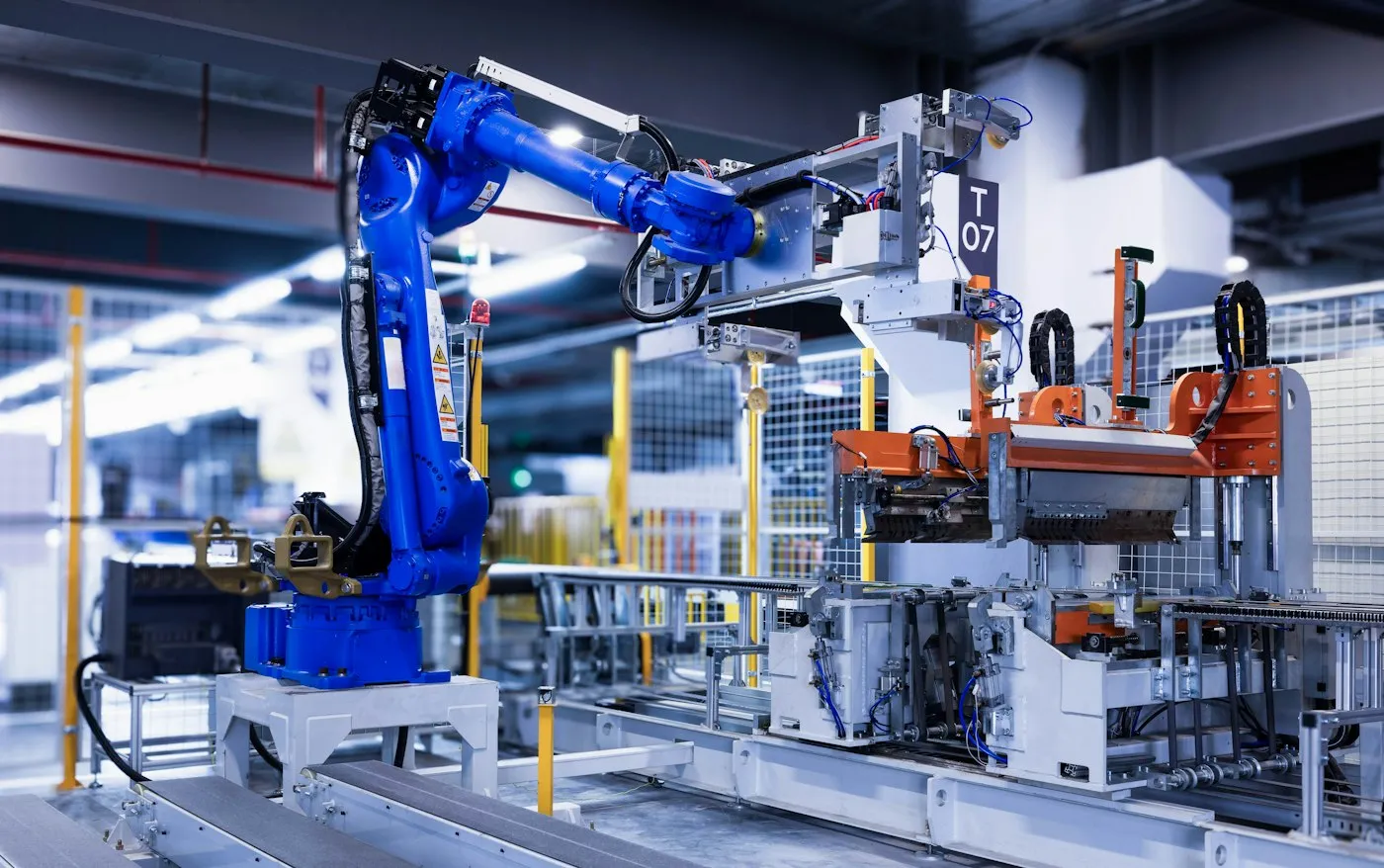
- Design and data security
- NDA protected
- Tolerance
- Down to ±0.005 mm, on request
- Finish
- Anodizing Type II and III
- Replies
- Within 6 hours
CNC machined parts for robotics are the adapter plates, gripper fingers, mounts, housings and guarding that turn a robot into a working cell. Maketeq makes them in metal for automation integrators and cell builders worldwide, milled, turned, laser cut and bent to your drawing. Every order is inspected against the drawing and ships with its QC report, mill certificates and ISO 9001 documentation.
This page is about parts for robots and automated equipment. We don’t build robot cells or run machines with robots.
Which parts does a robot cell need?
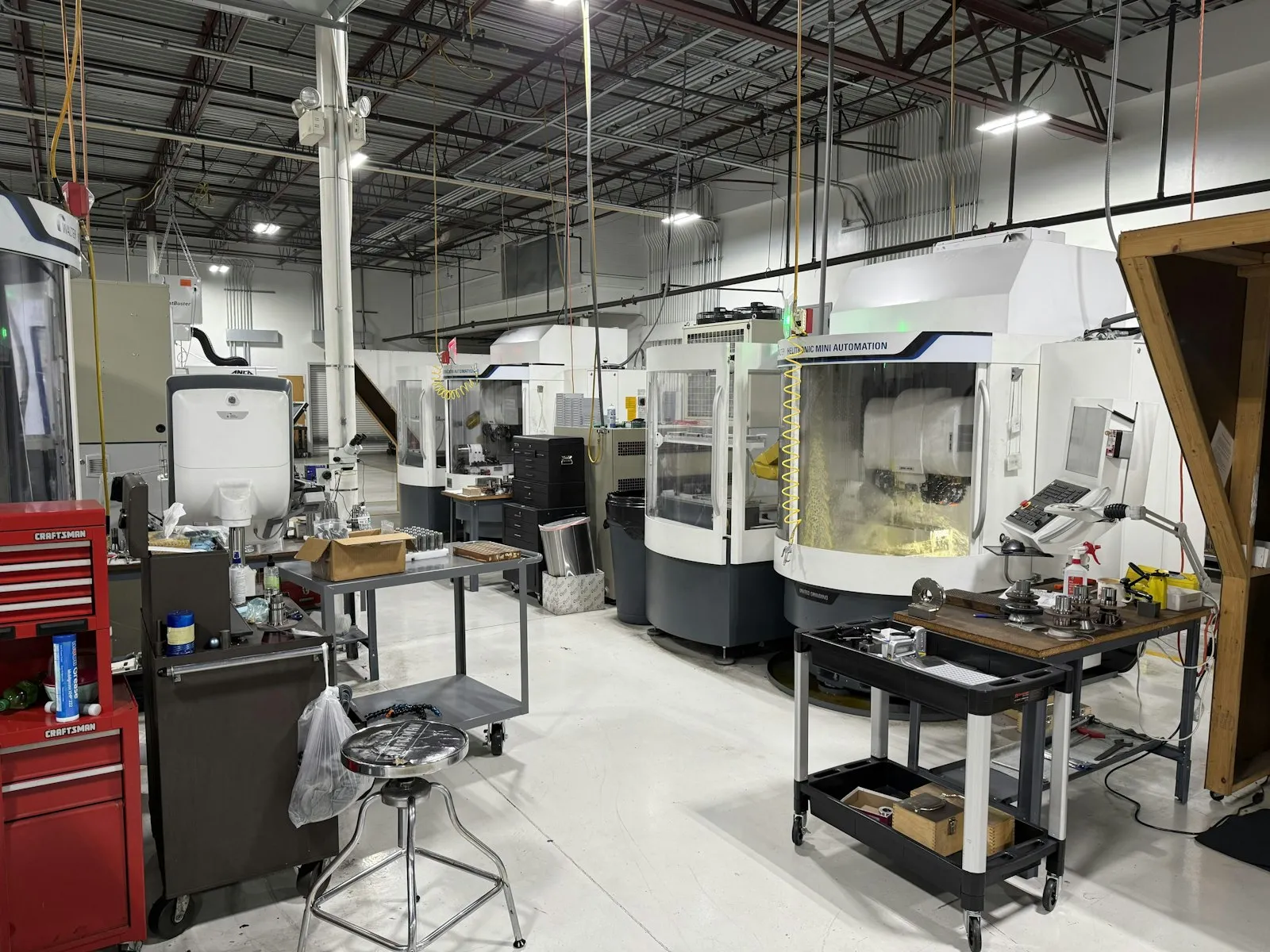
A cell is end-of-arm tooling, the mounts that carry sensors and drives, and the guarding around it. This is how those parts route, with the metal series that usually suit them:
| Part | Process | Metals that suit |
|---|---|---|
| Flange adapter plates | CNC milling, or turning for round plates | Aluminum 6xxx or 7xxx; stainless or tool steel for wear and stiffness |
| Gripper fingers and jaws | CNC milling | Aluminum 6xxx or 7xxx; tool steel or stainless where they wear or are washed down |
| Sensor, camera and motor mounts | Laser cutting and bending, or milling | Aluminum 5xxx or 6xxx, mild steel, stainless 300 series |
| Joint and gearbox housings | Milling and turning, 5-axis for several faces | Aluminum 6xxx or 7xxx |
| Pins, locators and spacers | CNC turning | Stainless 300, 400 or PH series, mild steel, tool steel |
| Cell frames and guarding | Laser cutting and bending | Mild steel with powder coating, aluminum 5xxx, stainless |
| Pneumatic and vacuum manifolds | Milling and drilling | Aluminum 6xxx, brass |
The aluminum series follow the numbering of the Aluminum Association. See our aluminum CNC machining page for how each series machines and anodizes.
Which process?
Milled, sheet metal, or both?
A robot cell needs both kinds of part. You don't have to sort them: send the drawings and each one is routed.
End-of-arm tooling
CNC milling
- Flange adapter plates
- Gripper fingers and jaws
- Joint and gearbox housings
- Manifolds and fixtures
One cell, both processes
Machined and sheet metal
- Sensor mounts on formed brackets
- Guarding with machined hinges and mounts
- Enclosures with machined panels
- Cable trays with milled clamps
Guarding and mounts
Sheet metal
- Guard panels and doors
- Formed sensor brackets
- Cable trays and covers
- Control enclosures
Applications
Parts for robots and automated cells
End-of-arm tooling, mounts and guarding, from one prototype cell to repeat builds.
Flange adapter plates
Plates milled to your robot's tool flange pattern.
Gripper fingers and jaws
Milled fingers shaped to the part they hold.
Sensor, camera and motor mounts
Milled or laser cut and bent brackets.
Joint and gearbox housings
Multi-face housings with bores and register faces.
Pins, locators and spacers
Turned dowels, locating pins and standoffs.
Cell frames and guarding
Panels, doors and enclosures from sheet.
Alignment fixtures
Fixtures and calibration blocks for the cell.
Pneumatic and vacuum manifolds
Drilled blocks with ported faces.
Our capabilities
Capabilities for robot and automation parts
The metals, finishes and documents for end-of-arm tooling and cell parts. The exact grade, tolerances and finish are confirmed in your quote.
A wide range of metals
Metals, plastics and other materials (plastics: see `plastics`; Vivek, 24 Oct 2026). Listed by alloy series; the exact grade is confirmed in your quote.
Aluminum keeps moving mass down at the end of the arm. Use stainless steel or tool steel where a part wears or is washed down.
1xxx · 2xxx · 3xxx · 4xxx · 5xxx · 6xxx · 7xxx · 8xxx
200 series · 300 series · 400 series · PH grades
10xx · 11xx · 12xx
A series · D series · H series · M series · O series · S series · W series
Grades 1 to 4 · Grade 5
C2xxxx · C3xxxx
C1xxxx
From as-machined to anodized
State which surfaces grip, slide or locate. Anodizing adds a thin layer, so bores and flange registers may need masking.
- As-machined
- Bead blasting
- Anodizing Type II
- Anodizing Type III (hard anodizing)
- Powder coating
- Brushing
- Passivation
- Electroplating (nickel, chrome, zinc)
- Painting
CNC machining
Down to ±0.005 mm
±0.0002" · on request, depending on the part
Laser cutting
Down to ±0.05 mm
±0.002" · on request, depending on the part
Bending
Down to ±0.1 mm
±0.004" · on request, depending on the part
There is no standard tolerance that applies to every part. What we can hold depends on the part: geometry, size, wall thickness, material, process, finish and how the feature is inspected. We work to the tolerances on your drawing and confirm them in the quote.
Paperwork your customer will ask for
A CMM inspection report suits flange patterns, register diameters and bores that set the tool's position.
With every order
- Standard QC inspection
- Material certification (mill certs)
- ISO 9001 documentation
On request
- CMM inspection report
- DFM analysis
- Geometric and dimensional metrology reports (FAIR, ballooned drawing, 3D scan, manual, Ra)
- Material verification and chemistry reports (MTC, PMI)
More on request
- Non-destructive testing reports (LPI, MPI)
- Process capability and compliance reports (SPC, PPAP)
- Other reports, on request
End-of-arm tooling
What to send for robot parts, and what we check
Most fit problems on robot parts start with the flange pattern or a missing datum. These are the details that prevent them.
What you send
- The ISO 9409-1 flange designation or the robot maker's flange drawing
- A STEP model and a PDF drawing with datums
- The surfaces that grip, slide or locate
- The working environment: dry, washdown or cleanroom
What we check before quoting
- Bolt circle, locating bore and pin positions against the flange
- Datums shared by the machined and sheet metal parts
- Pockets that cut mass without losing stiffness
- Finish and masking on bores and registers
- Which features need a CMM report
What is the ISO 9409-1 robot flange?
ISO 9409-1 sets the main dimensions, designation and marking of the circular plate at the end of a robot arm, so end effectors fit and orient the same way on any compliant robot. It comes from the International Organization for Standardization (ISO).
The adapter plate between the robot and your tool is a machined part. Give the flange designation or the robot maker’s flange drawing, and the plate is milled to that bolt circle, locating bore and pin position. Those features set where the tool sits, so they’re the ones to check on a CMM report.
Which metals and finishes suit robot parts?
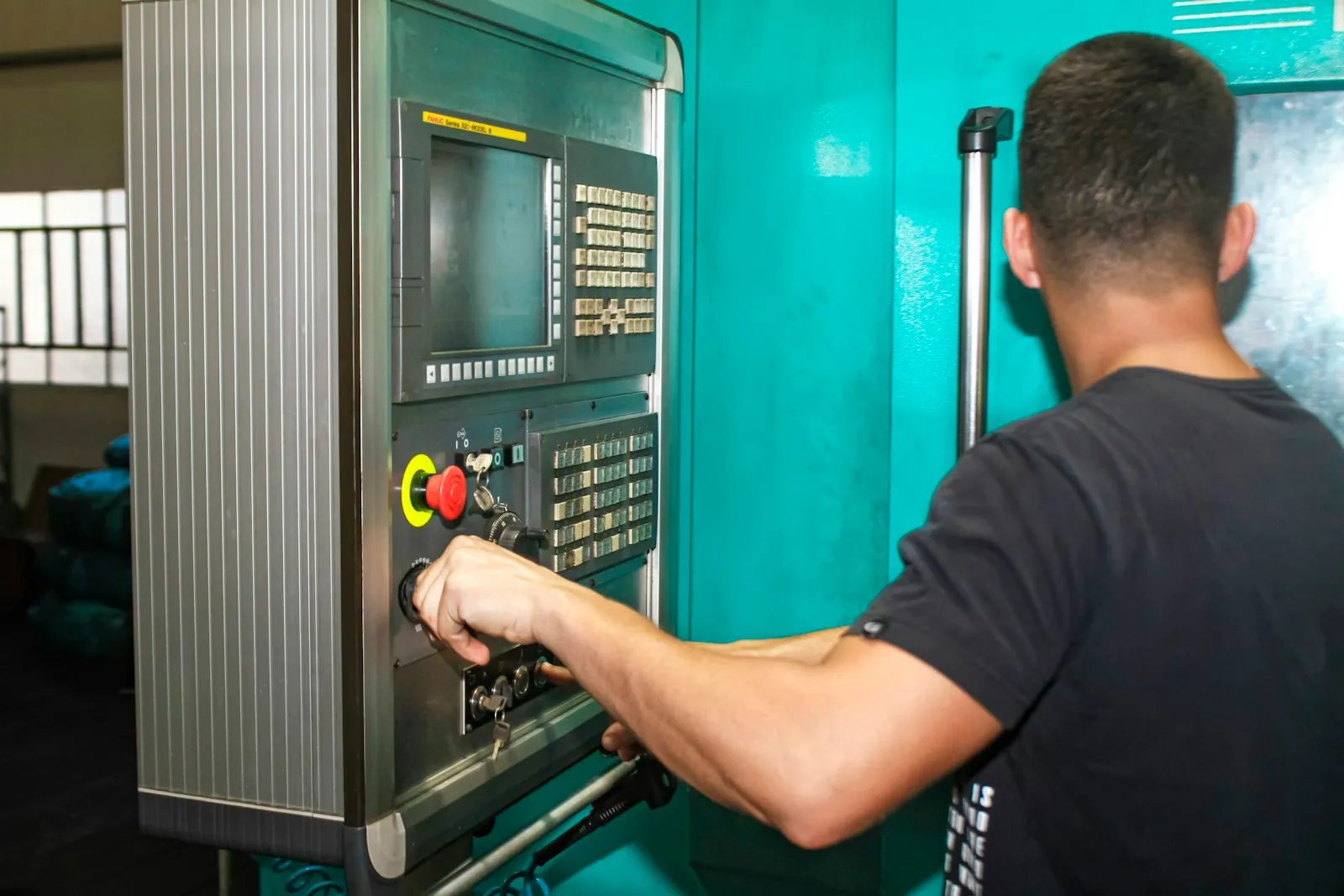
The end of the arm rewards low mass, so aluminum is the usual choice for adapter plates, fingers and housings. Steel and stainless go where a part wears, takes a high load or is washed down.
| Need | Metal | Finish |
|---|---|---|
| Light, stiff plates and housings | Aluminum 6xxx or 7xxx | Anodizing Type II |
| Wear surfaces on aluminum fingers | Aluminum 6xxx or 7xxx | Anodizing Type III (hard) |
| Washdown or food-area parts | Stainless steel 300 series | Passivation or bead blasting |
| Wear and locating parts | Tool steel or stainless PH series | As-machined |
| Guarding and frames | Mild steel or aluminum 5xxx | Powder coating or painting |
The exact grade and finish are confirmed in your quote.
Who is responsible for robot cell safety?
The robot maker and the integrator. ISO 10218-1 covers industrial robots themselves and ISO 10218-2 covers robot applications and cells, both from ISO. Guarding around the cell is designed to ISO 14120, with interlocking devices in ISO 14119.
Those standards sit with whoever designs and builds the cell. We make the guard panels, frames and tooling to your drawings, and the documents with every order show the parts match them.
From the first cell to repeat builds
Integrators often build one cell, prove it, then build it again for the next line or the next customer. The parts need to match each time.
The first order gets a sample part for reference before production starts, so you can check the fit on the robot. Repeat batches are made to that approved sample and inspected against your drawing. If the design changes between builds, send the new drawing revision with the order, and it goes back through engineering review before anything is cut.
Keep the flange designation, datums and finish on the drawing itself rather than in an email. Then every build is made from the same information, whoever places the order.
Right first time
Why robot parts come back wrong, and how we prevent it
These are the faults that stop a cell at commissioning. We look for them before anything is cut.
Adapter plate won't seat on the flange
Why:The pattern came from an old drawing, or the locating bore and pin were mis-specified.
We ask for the flange designation or the maker's drawing, and offer a CMM report on the pattern and register.
Gripper fingers wear fast
Why:Soft aluminum on the contact surface with no surface treatment.
We ask what the fingers grip, and suggest hard anodizing, stainless or tool steel to suit.
Too much mass at the end of the arm
Why:Heavy metal or thick sections chosen by habit.
Aluminum and pocketed designs where stiffness allows; DFM analysis on request.
Sensor bracket misaligned with the machined mount
Why:Different suppliers working to different datums.
Machined and sheet metal parts from one supplier, to common datums.
Quality assurance
Every flange pattern, bore and register, checked
We guarantee consistent quality from first order to repeat production.
- ISO 9001 certified quality system
- Flange patterns, bores and locating features checked against your drawing before the parts ship
- Standard QC inspection, material certification (mill certs) and ISO 9001 documentation with every order
- CMM inspection report and DFM analysis on request
- NDA as standard. Files shared only with our production team.
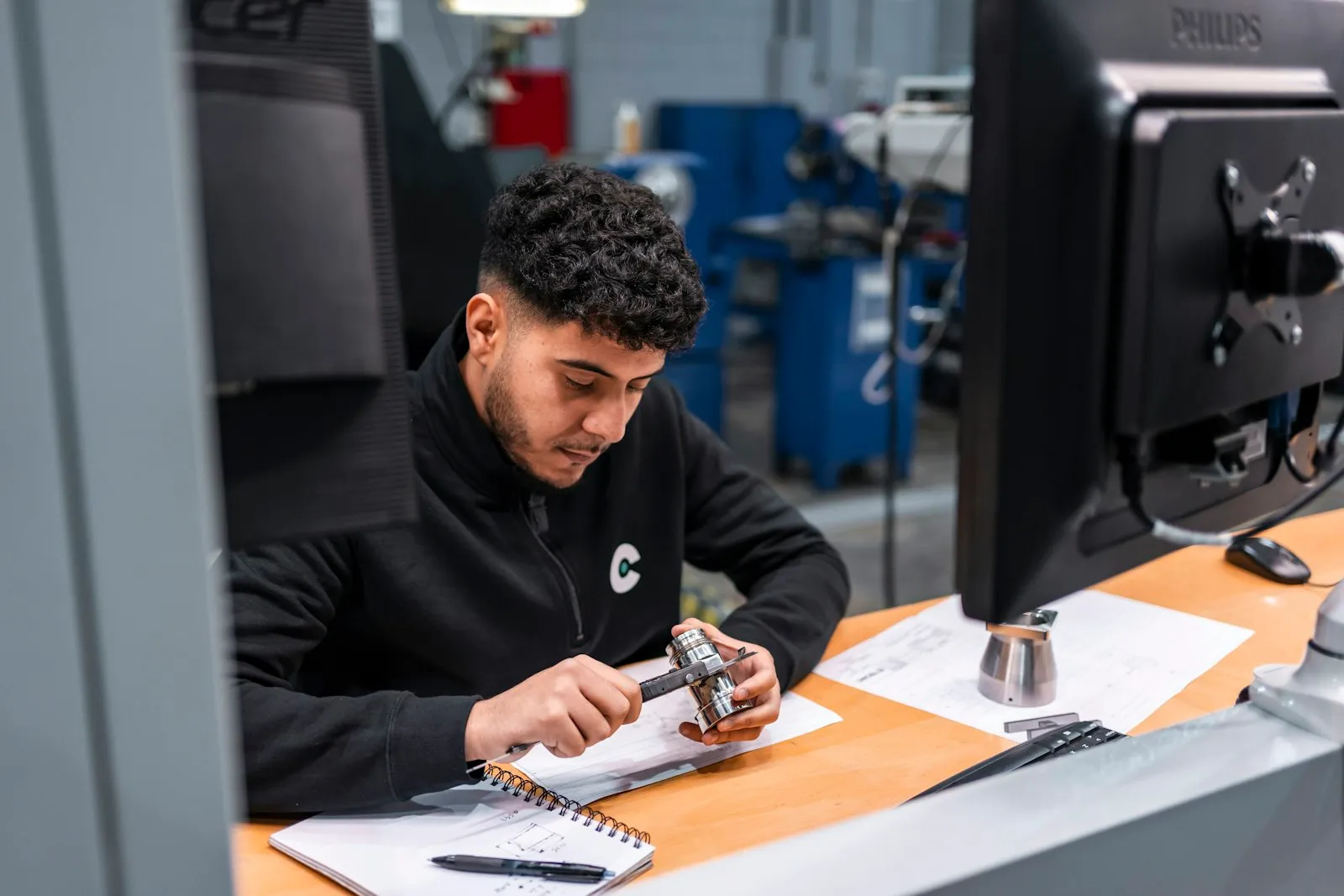
How we work
From inquiry to satisfaction
The same path on every order, so you always know what happens next and what you'll receive.
- 01
Inquiry and drawing
You send your CAD file or drawing. We log the design and an engineer reviews it for manufacturability (DFM).
- 02
Quote with DFM notes
One quote with the price, the lead time and notes on anything that adds cost.
- 03
Sample part for reference
A sample part is made and sent to you for reference before production starts.
- 04
Production
The batch is made to the approved sample and inspected against your drawing.
- 05
Proof before the parts arrive
Photos of your parts, the QC reports and proof of dispatch reach you before the parts do.
- 06
Delivery and satisfaction survey
Parts arrive by standard delivery, and we ask how we did with a short customer satisfaction survey.
Gallery
Robot and automation parts gallery
Why Maketeq
Why automation builders choose Maketeq
Tooling and guarding on one order
Machining and sheet metal from one supplier: adapter plates, fingers, mounts and guarding together.
Accuracy where the tool locates
Tolerances down to ±0.005 mm (±0.0002") on request, depending on the part, for patterns and registers.
Documents with every order
QC inspection, mill certificates and ISO 9001 documentation with every order; CMM report and DFM analysis on request.
Proof before the parts arrive
Photos of your parts, the QC reports and proof of dispatch reach you before the parts do.
Engineers who reply
Technical team on email and WhatsApp. Reply within 6 hours, whatever your time zone.
More than 50% lower cost
Below typical US and European machining prices and online manufacturing platforms, from a geographic cost advantage, not from less inspection.
Questions buyers ask about CNC machined parts for robotics
Is robotic CNC machining the same as machining robot parts?
No. “Robotic CNC machining” can mean machining done by robots or machines tended by robots. We make the metal parts that go into robots and automated cells, to your drawing.
What tolerance do robot parts need?
It depends on the part. Flange patterns, registers and locating bores usually carry the tightest callouts. We work to your drawing and can hold down to ±0.005 mm (±0.0002”) on request, depending on the part.
Do you need a CMM report for robot parts?
Not always, but it’s worth asking for on parts that set the tool’s position, such as adapter plates and locators. A CMM inspection report is available on request.
Can you make the guarding as well as the tooling?
Yes. Machining and sheet metal come from one supplier, so guarding, mounts and end-of-arm tooling can be made on one order.
Do you send a sample before production?
Yes. A sample part is made and sent to you for reference before production starts.
Is there a minimum order quantity?
No. You can order one part for a prototype cell or a batch for repeat builds.
Ready to start? Upload your drawings for a quote. See the other industries we supply.
Learn more
Related guides and articles
Capabilities
How we make metal parts
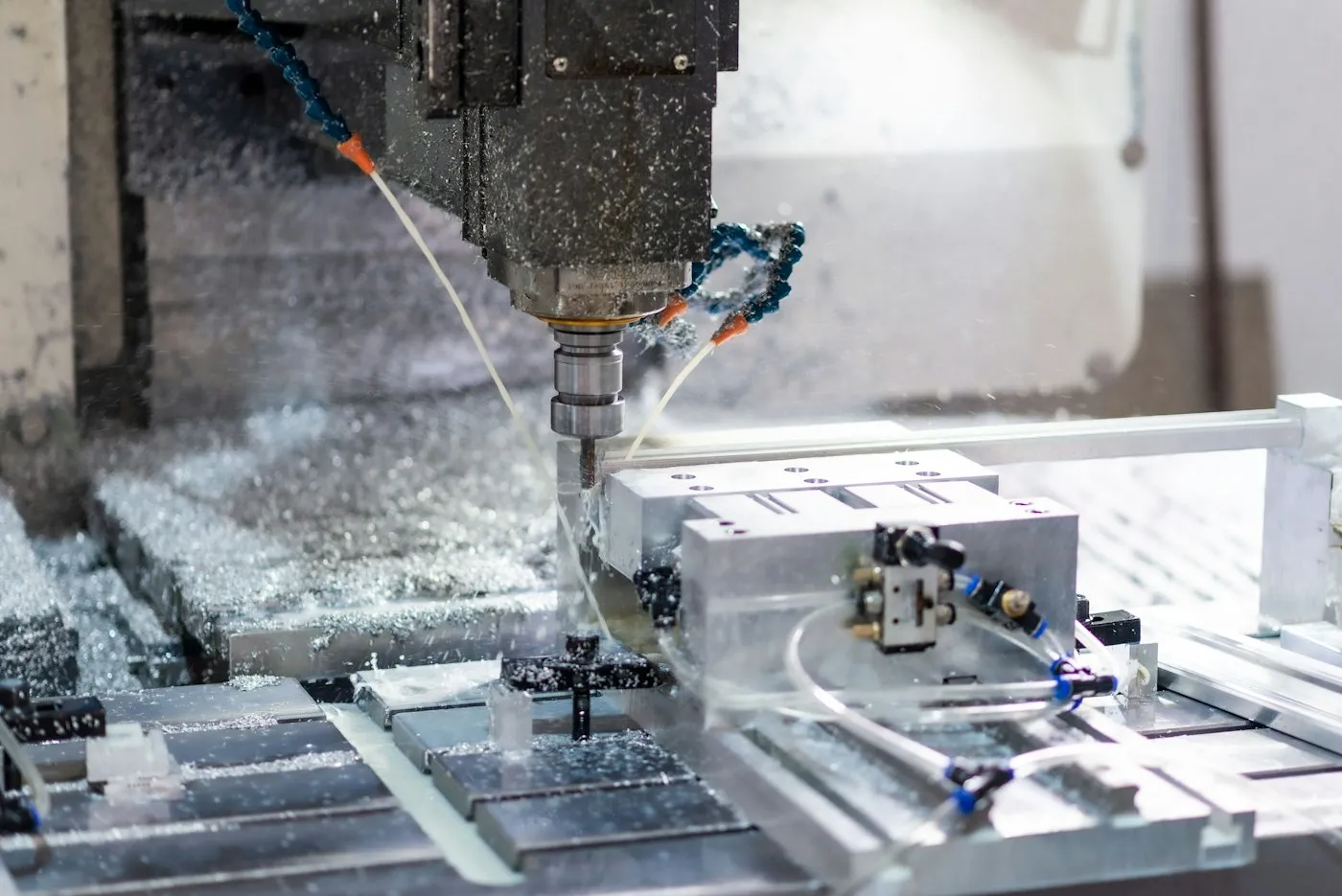
CNC machining
Prismatic metal parts made from your STEP file and drawing.
Explore CNC machining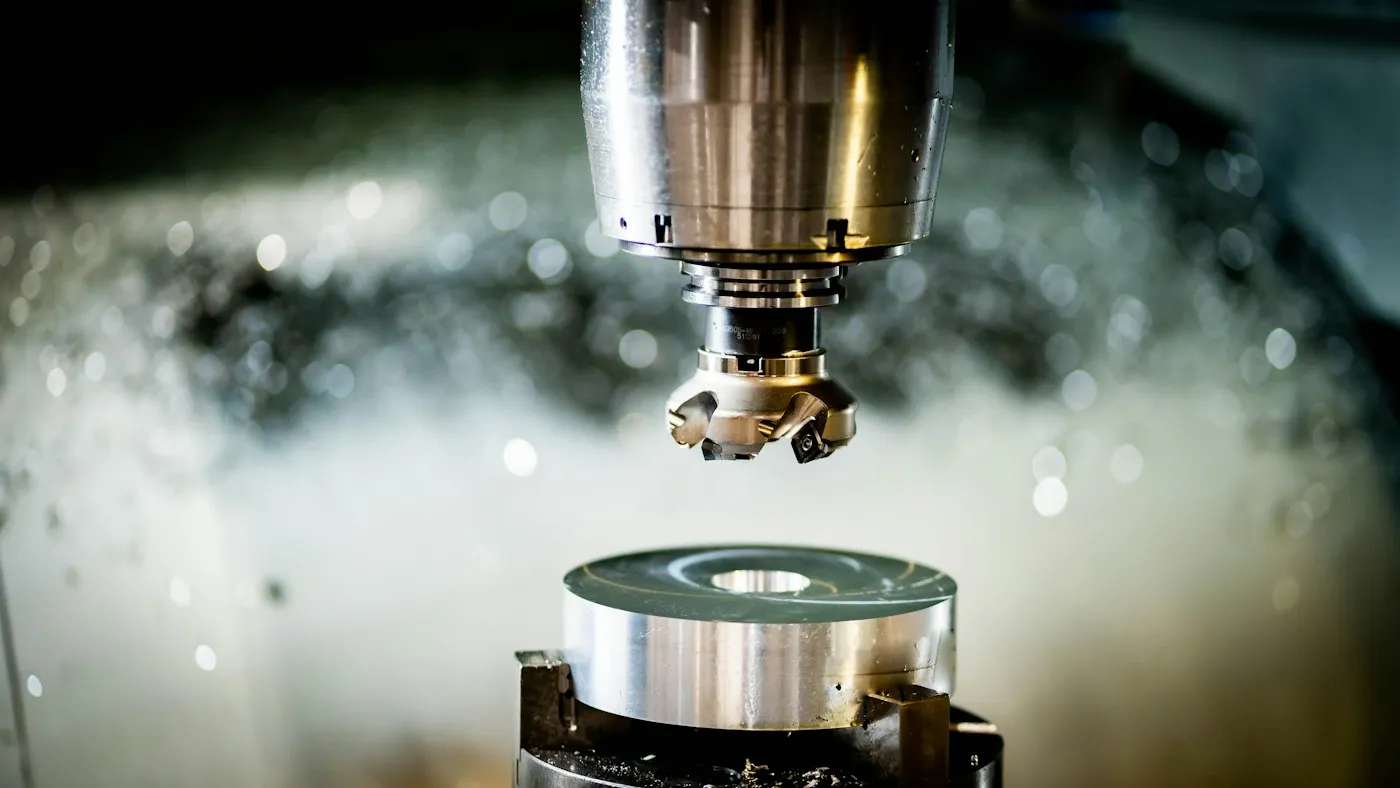
CNC milling
Pockets, faces, slots and threaded features on VMC.
Explore CNC milling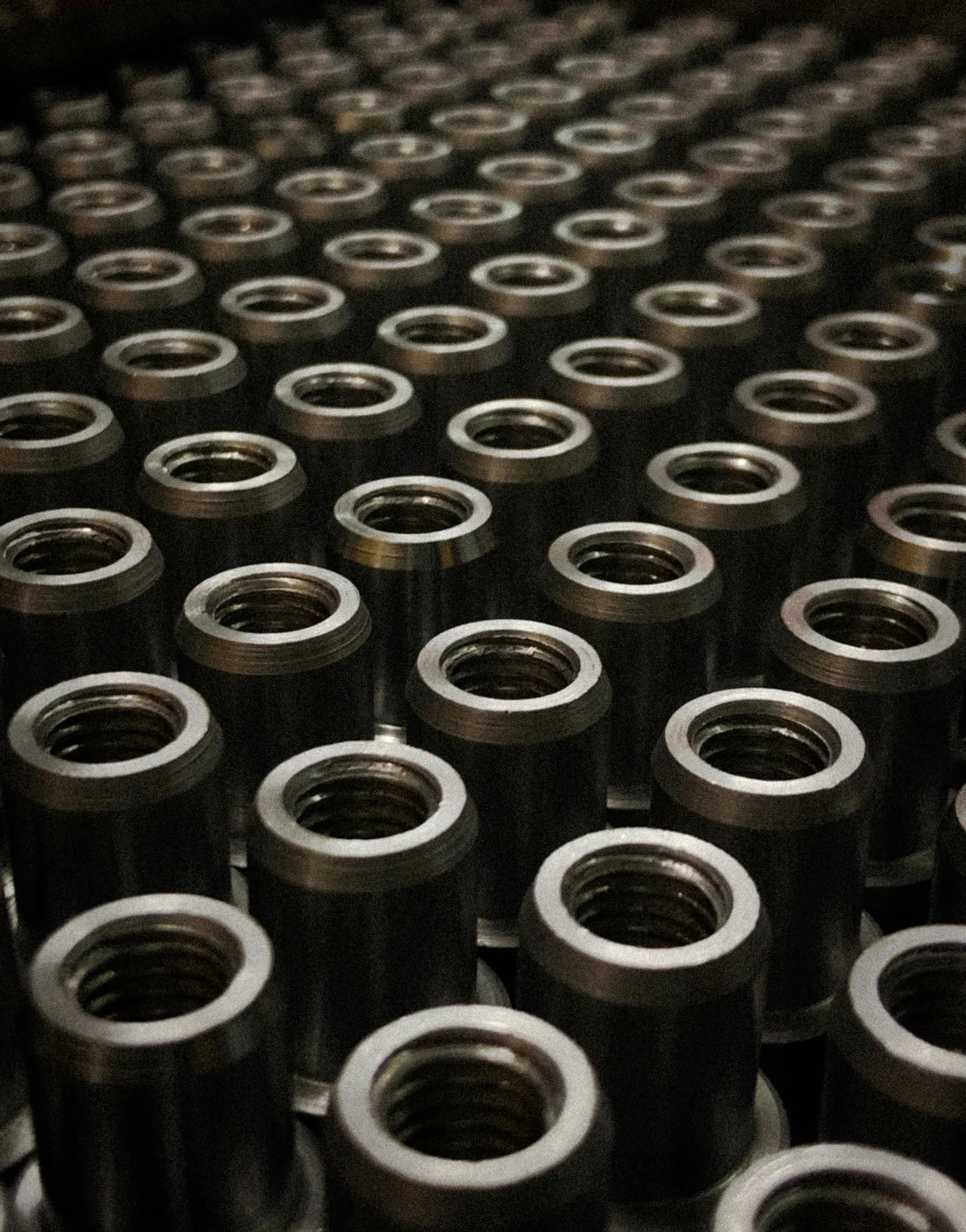
CNC turning
Shafts, pins, bushings and round fittings turned on CNC lathes.
Explore CNC turning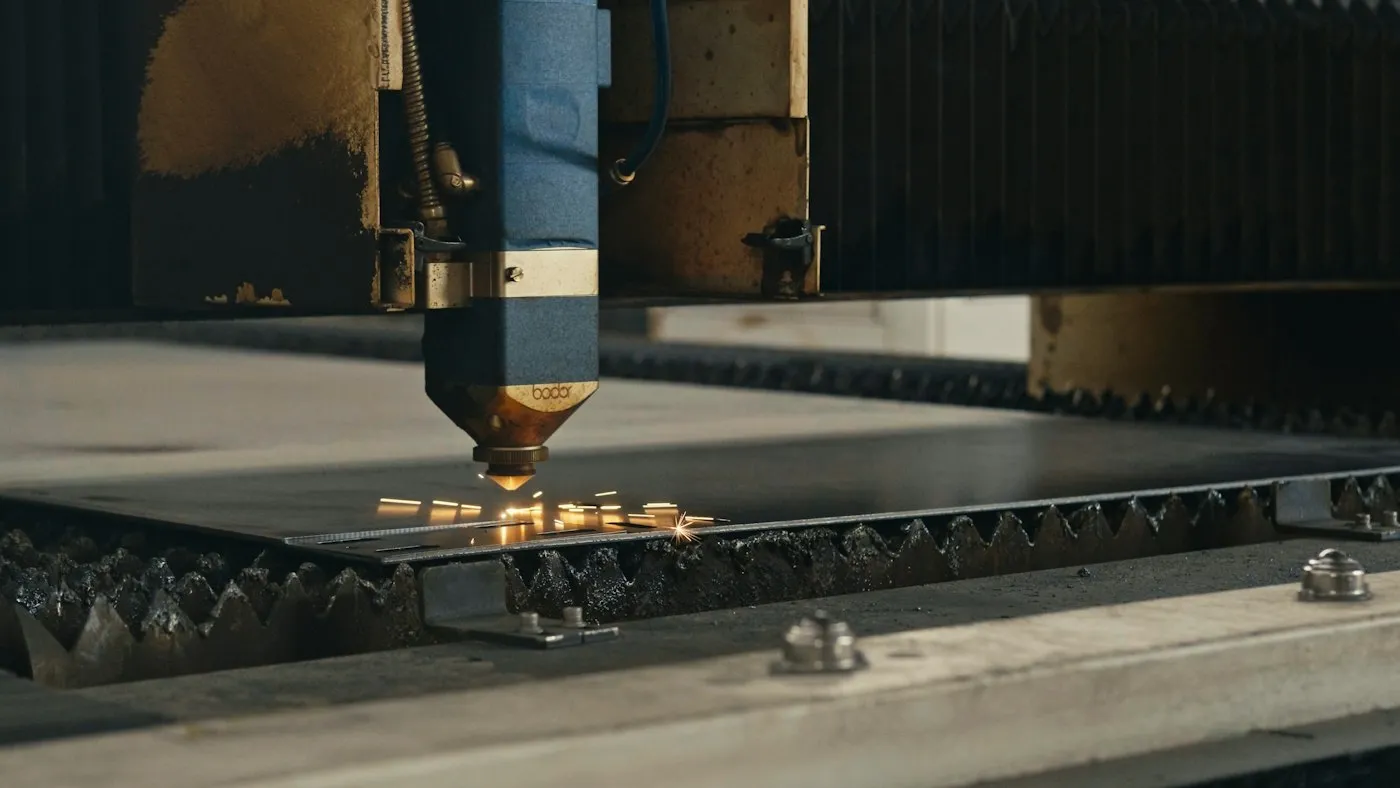
Sheet metal cutting
Flat profiles with clean, repeatable edges.
Explore sheet metal cutting
Send the drawings for your cell
Send the end-of-arm tooling, mounts and guarding together. An engineer routes each part and sends one quote.